
Argentina, But Make It Moschino
For his first Fall/Winter 2026 collection at Moschino, Argentine creative director Adrián Appiolaza does not just add a few nods to “home” and call it a day. He builds the collection around concrete pieces of Argentine everyday life: old bus tickets from city colectivos (public buses), comic strip characters, political figures like Eva Perón, football culture, tango, and scenes from Buenos Aires. All of these elements are reworked through Moschino’s usual mix of irony and bold graphics. Instead of using the country only as a theme or backdrop, Appiolaza is interested in what he calls “memoria afectiva,” the everyday memories people actually carry, and in what happens when a luxury brand lets Latin America speak from that perspective rather than treating it as a passing trend.
This feels especially important in a fashion industry that still leans heavily on European and North American nostalgia as its main storyline. Here, the headline is not simply that an Argentine designer is now leading a major Italian label. What stands out is that he uses that position to place workers, local habits, and small cultural jokes, things like churro sellers on the beach or a bus ticket machine, onto a runway where they almost never appear.
The Everyday As Icon: Colectivos, Churros, Norte
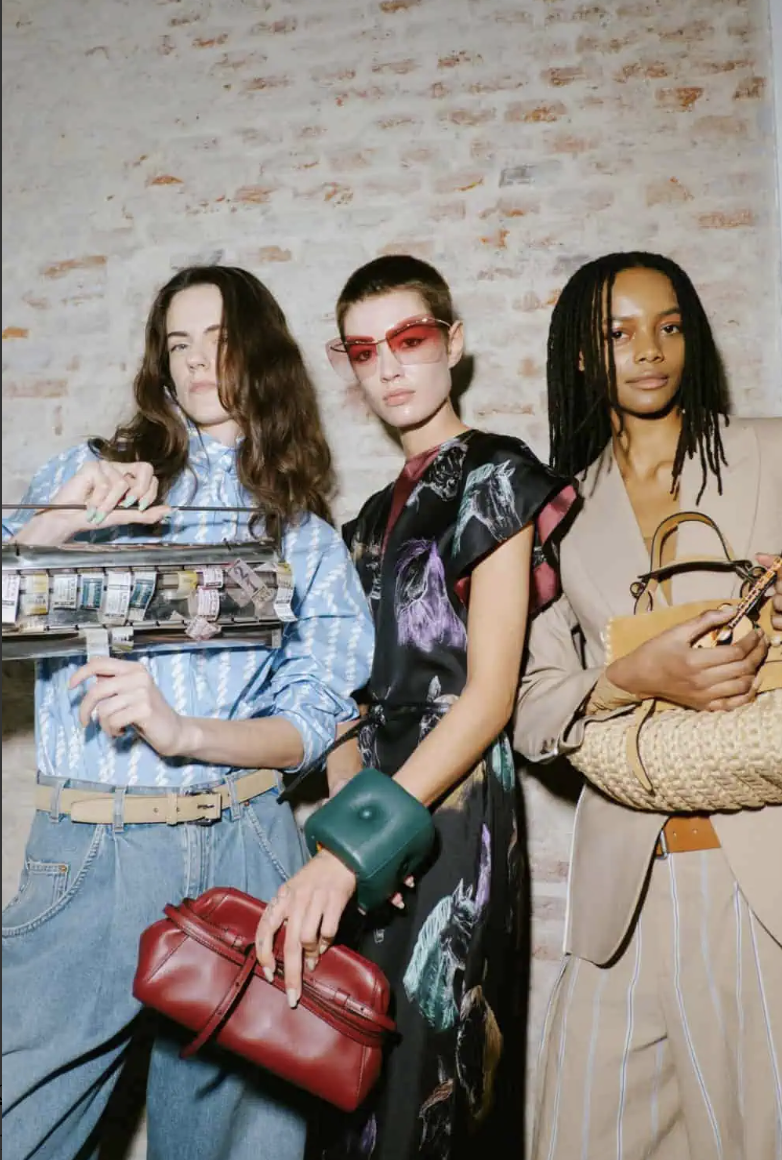
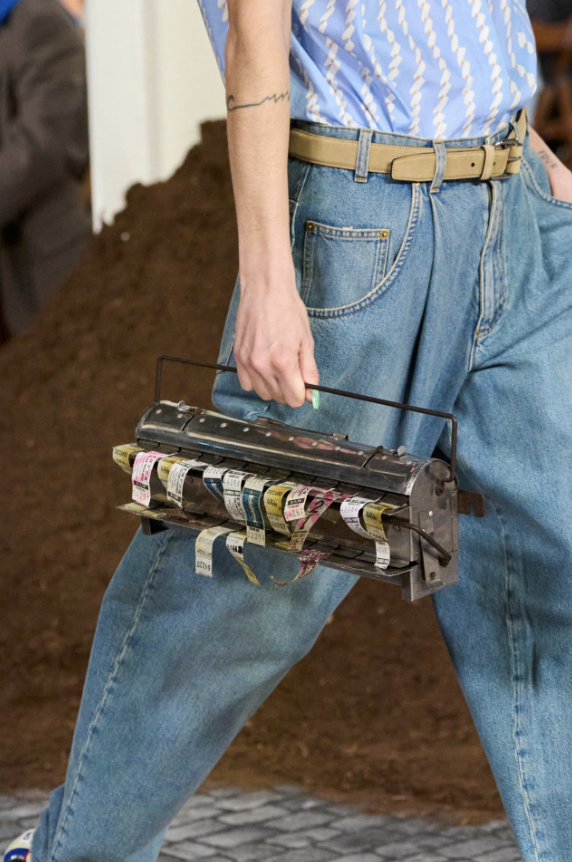
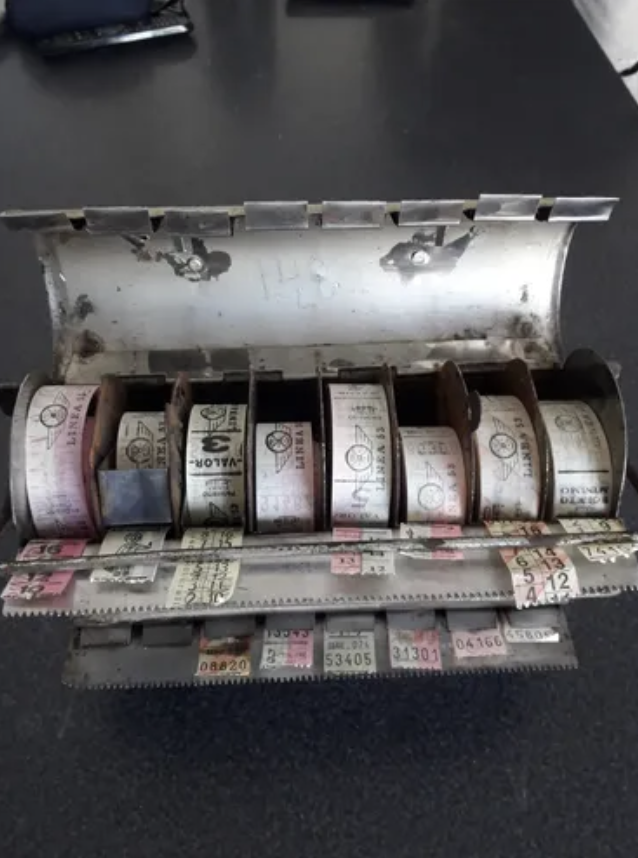
One of the clearest examples is a look that transforms an old bus ticket machine, the metal “máquina de boletos” once worn by drivers on Buenos Aires colectivos, into a polished luxury bag. The colorful paper ticket strips remain visible, so the object still resembles something you would have seen on public transport decades ago. The difference is that now, instead of hanging from a driver’s shoulder, it is carried by a model as a statement accessory. The design treats the daily act of moving across the city by bus as something worthy of being remembered and elevated rather than something the fashion world edits out.
Another look feels pulled directly from a postcard of northern Argentina. A mustard colored knit dress made with Andean inspired textiles features llamas and highland patterns that recall the landscapes and crafts of provinces like Jujuy and Salta in the country’s northwest. The silhouette is relaxed and wearable, but the point is sharp: Andean techniques and imagery are not treated as background decoration here. They become the focus of the garment itself.
Elsewhere in the collection, Appiolaza turns a distinctly Argentine summer memory into a fashion in joke. A crisp white outfit is paired with an accessory resembling a paper bag filled with churros, referencing the vendors who walk Argentine beaches in January selling fried dough while shouting out their flavors. For anyone who grew up spending summers there, the scene is instantly recognizable. Bringing that detail onto the runway fills a luxury space with workers and rituals that rarely appear in high fashion campaigns.
Workers, Taxis, Milongas
The collection’s tailored looks also move beyond a generic idea of “Latin flair.” One key outfit combines a sharp black coat reminiscent of classic menswear with draped checked fabric inspired by gaucho clothing from rural Argentina, alongside an accessory recalling the wooden bead seat covers common in Buenos Aires taxis. In a single look, Appiolaza brings together the countryside (“el campo”), milongas (social tango dance gatherings), and the late night taxi rides that connect them. The result reads as a quiet tribute to workers, or “laburantes,” in Argentine slang, and to cultural references usually left outside the frame of luxury fashion.
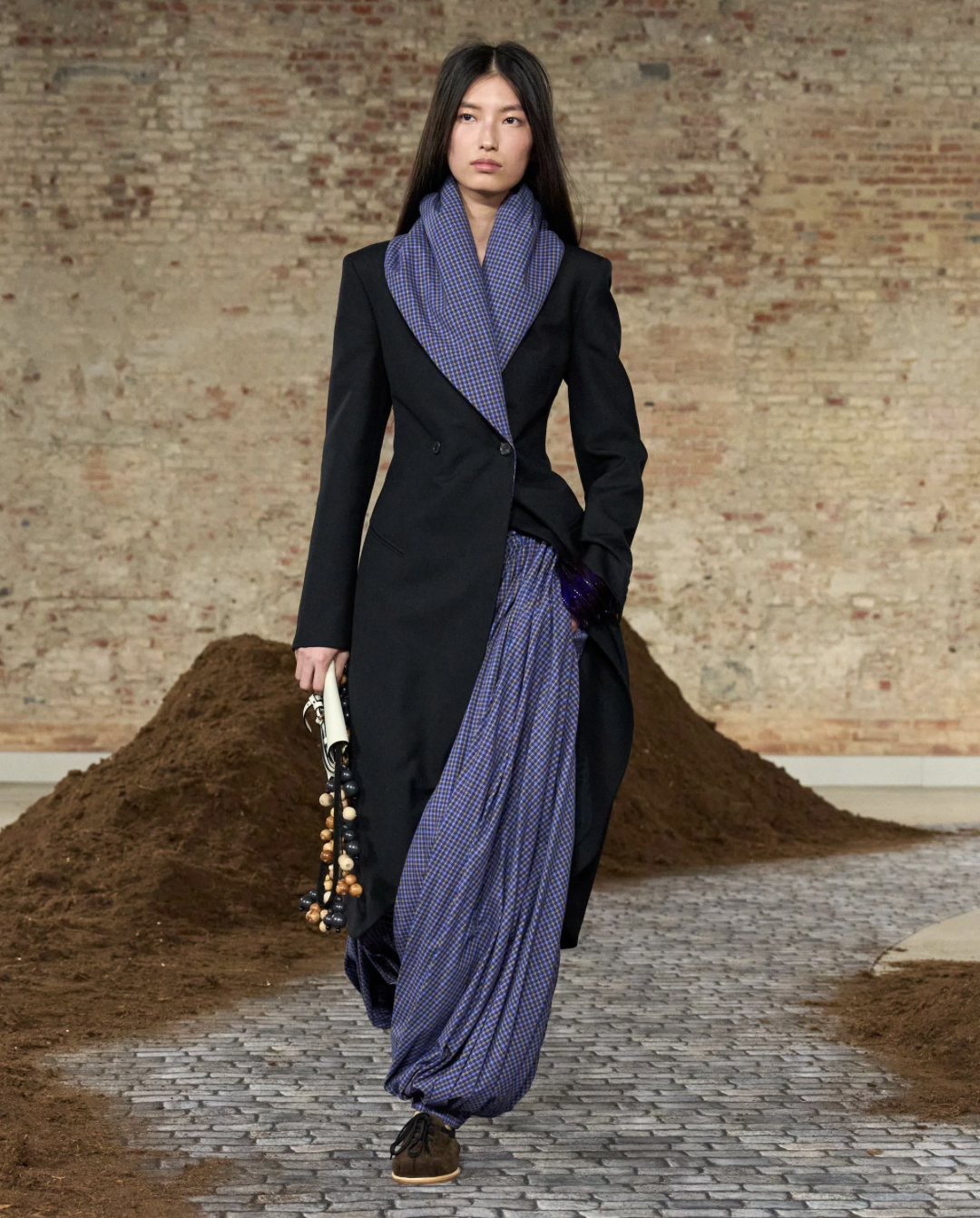
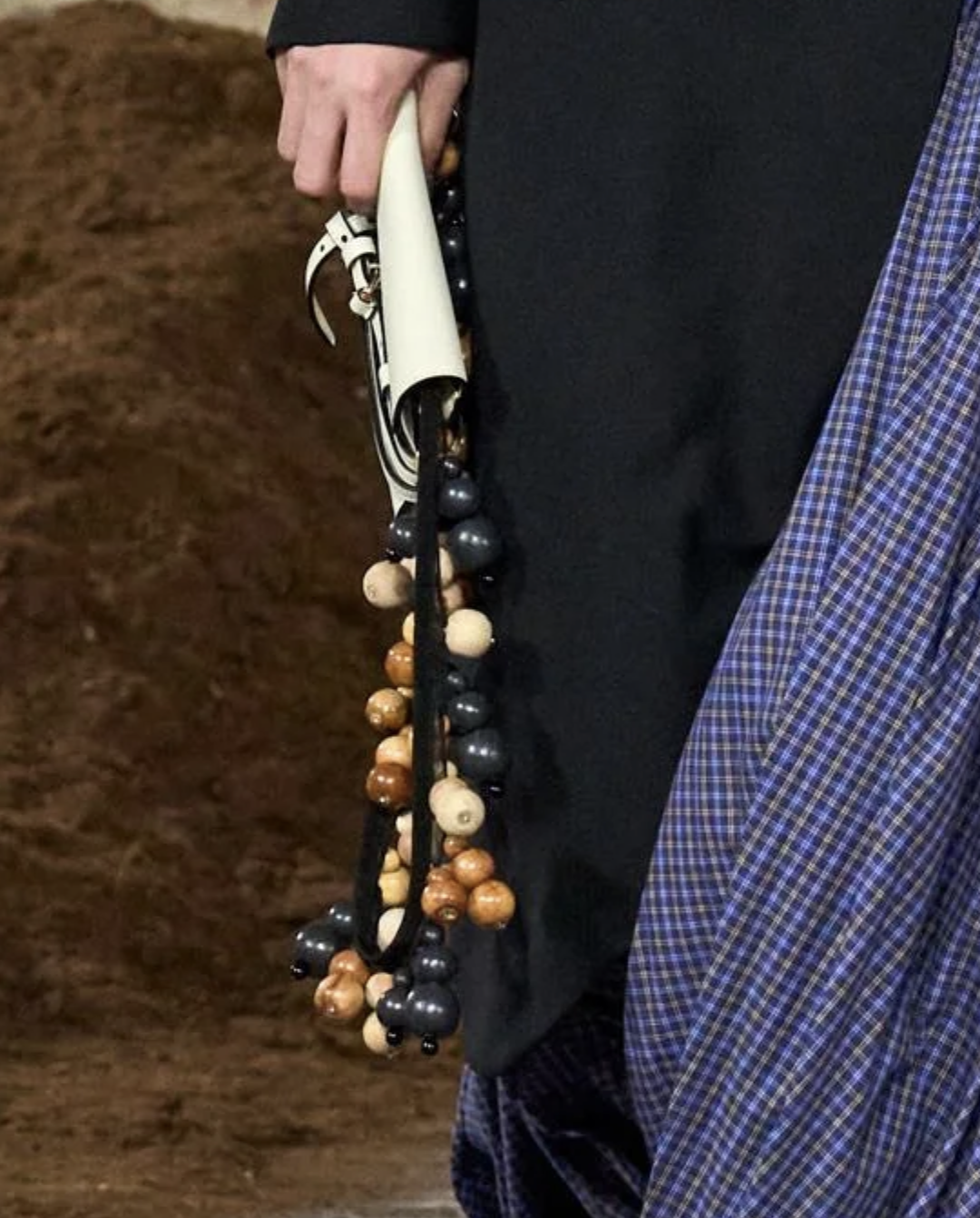
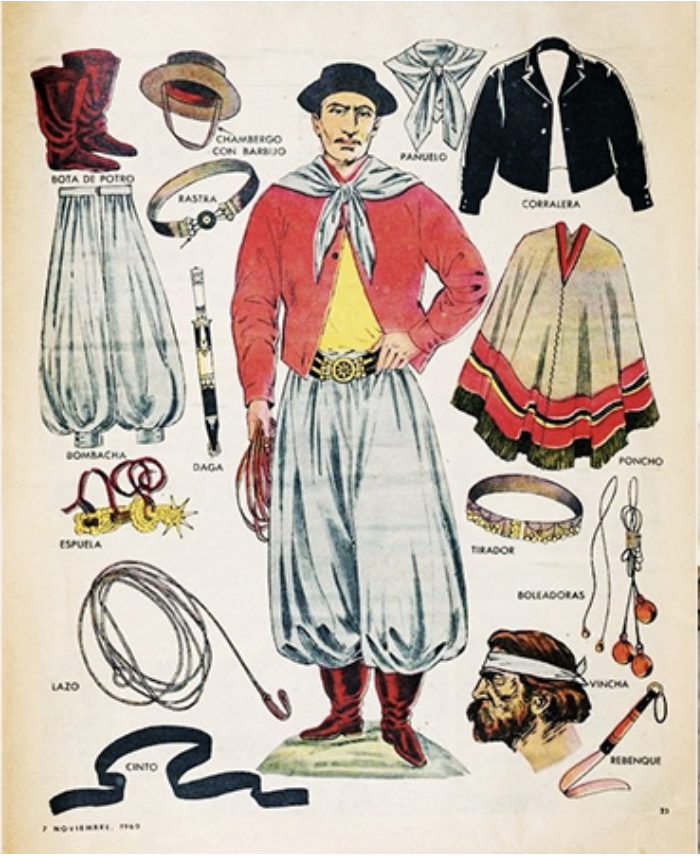

From gaucho wardrobe to taxi seat covers, Appiolaza splices working‑class Argentina directly into Moschino’s tailoring.
Another suit in soft grey captures the tension and intimacy of a tango embrace through long asymmetric ruffles that move like bodies turning across a dance floor.
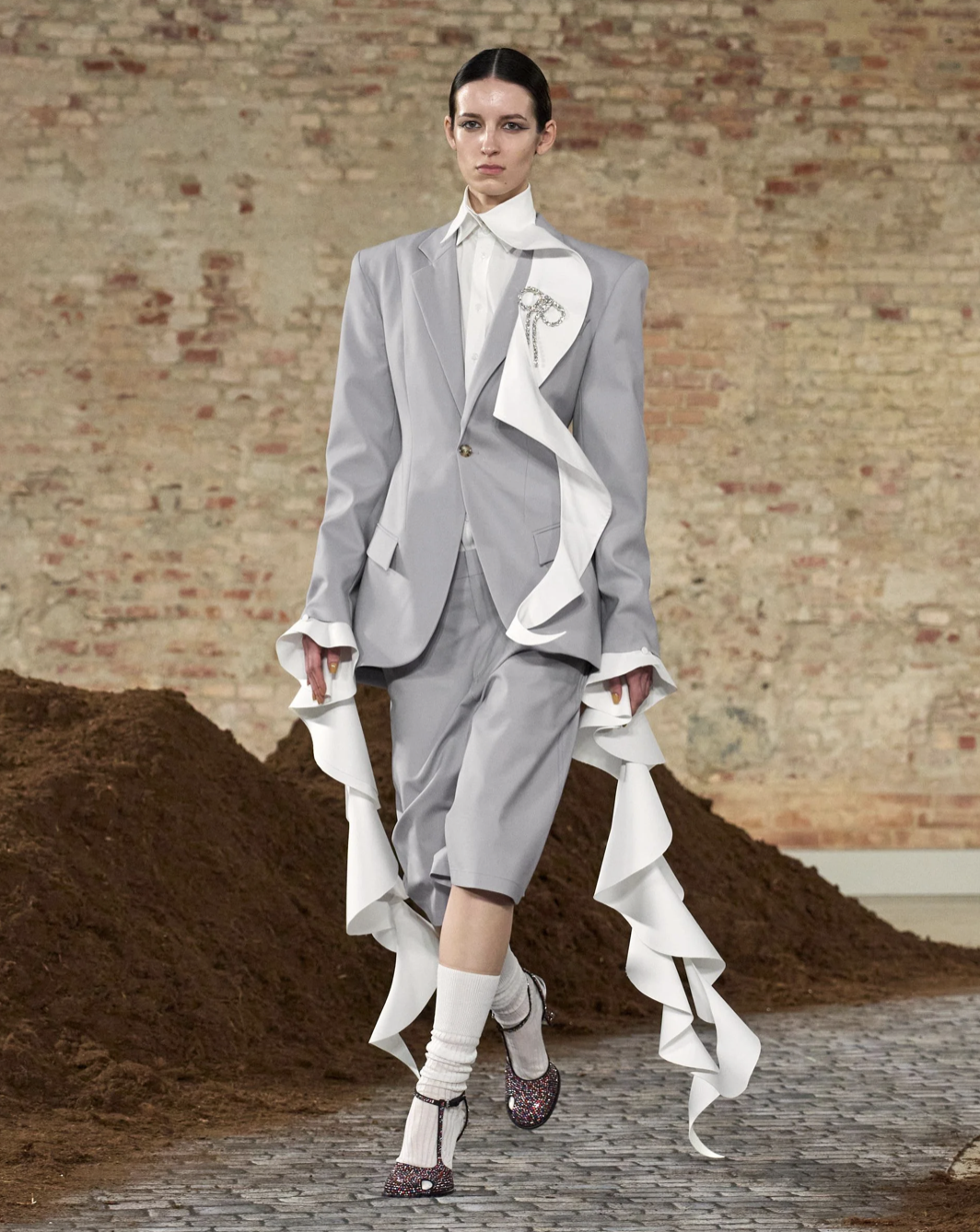
A light grey suit cut like classic menswear features a single button jacket and long Bermuda style shorts layered over a white shirt. Exaggerated white ruffles spill from the lapel and cuffs, trailing past the knees. Glitter Mary Janes and socks complete the look, mixing a feminine party shoe with a more practical, dance ready sensibility and heightening the contrast between structured tailoring and softer movement.
Mafalda, Evita, Maradona: Pop Politics on the Runway
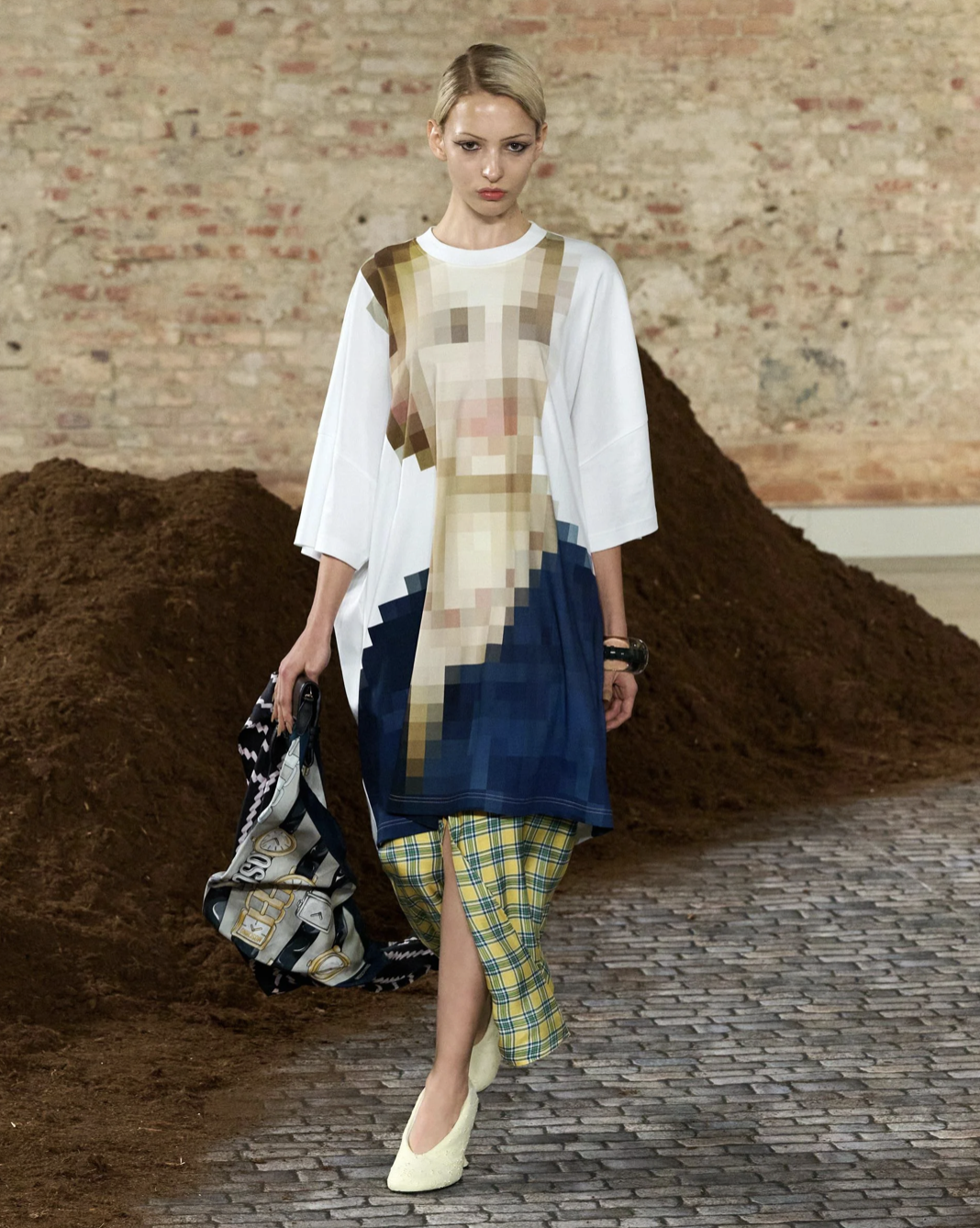
Some of Appiolaza’s strongest looks sit at the intersection of politics and pop culture. An oversized T shirt dress displays a pixelated image of Eva Perón, transforming her from a distant historical figure into someone native to the digital age. Presenting Evita as a low resolution graphic mirrors how many people encounter Argentine history today, through screens, memes, and online debate, while still preserving her political weight.
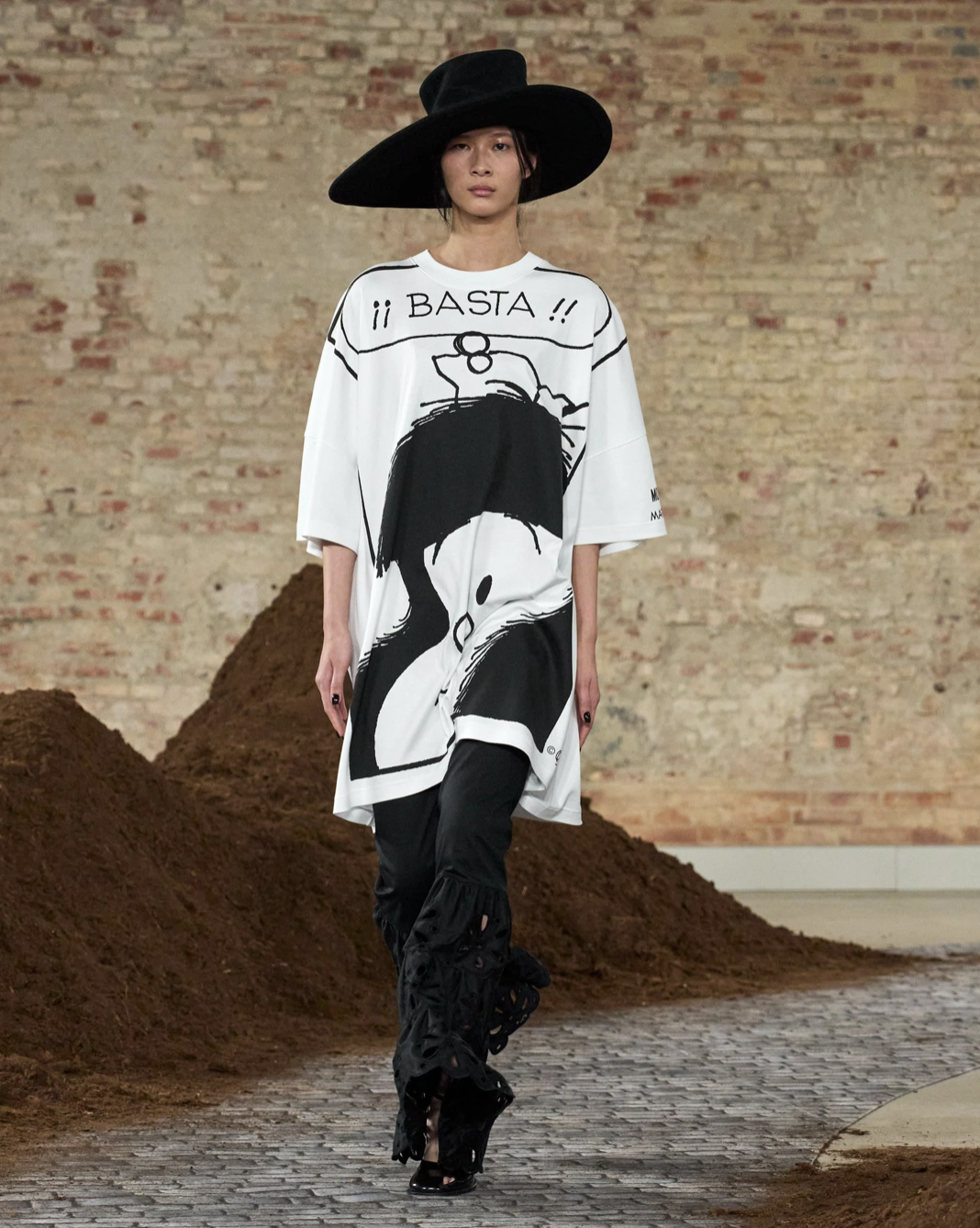
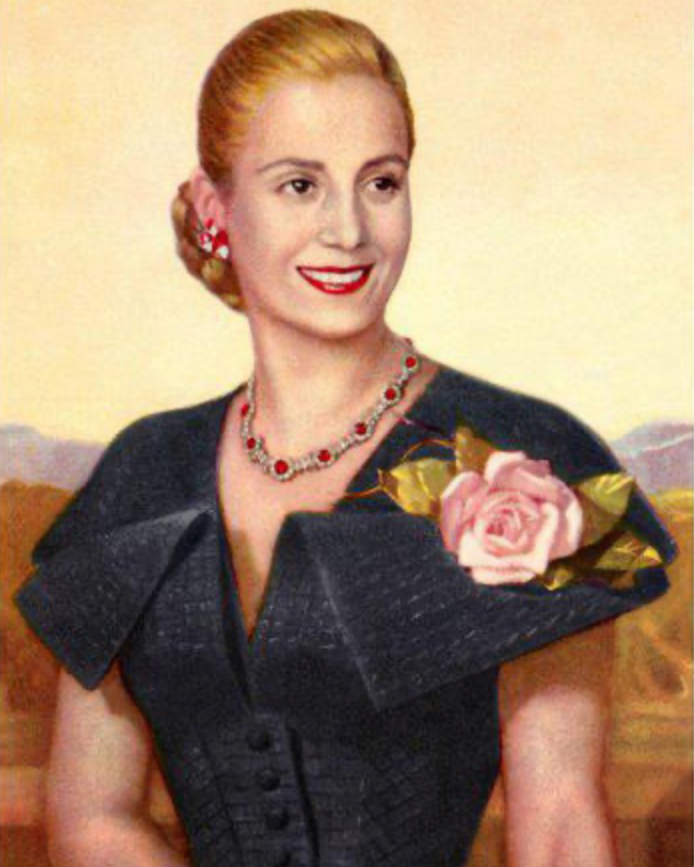
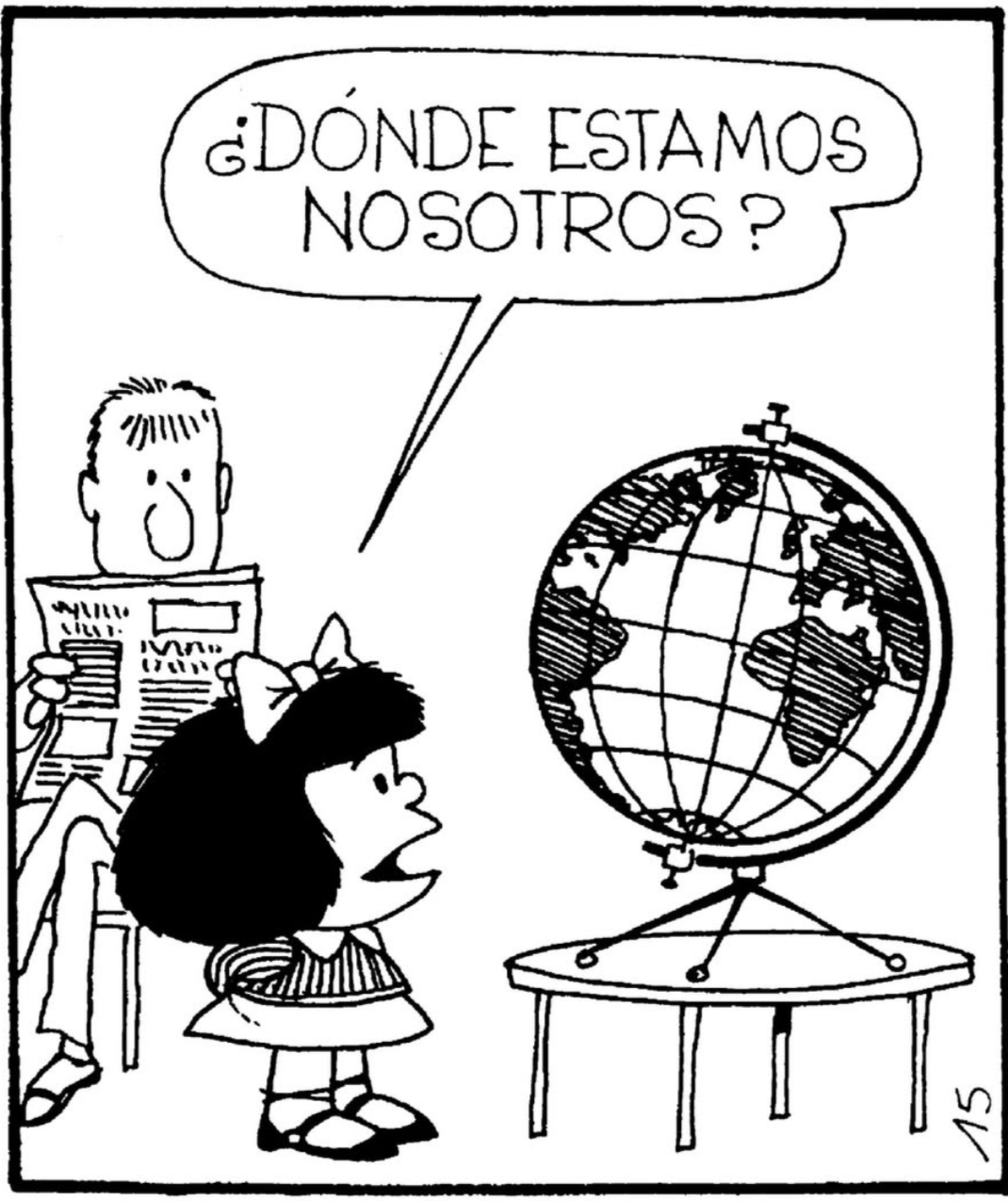
Then there’s Mafalda. Created by Argentine cartoonist Quino in the 1960s, she became known for questioning adults, politics, and inequality rather than simply acting as a cute children’s character. On the runway, an oversized white T shirt stamped with “¡¡BASTA!!” (“Enough!”) enlarges both her image and her protest into something wearable. The look does not reduce her to nostalgia. Instead, it transforms her into a walking poster that brings Argentina’s tradition of political graphic humor onto an international catwalk in a way that aligns naturally with Moschino’s long history of treating fashion as both joke and critique.
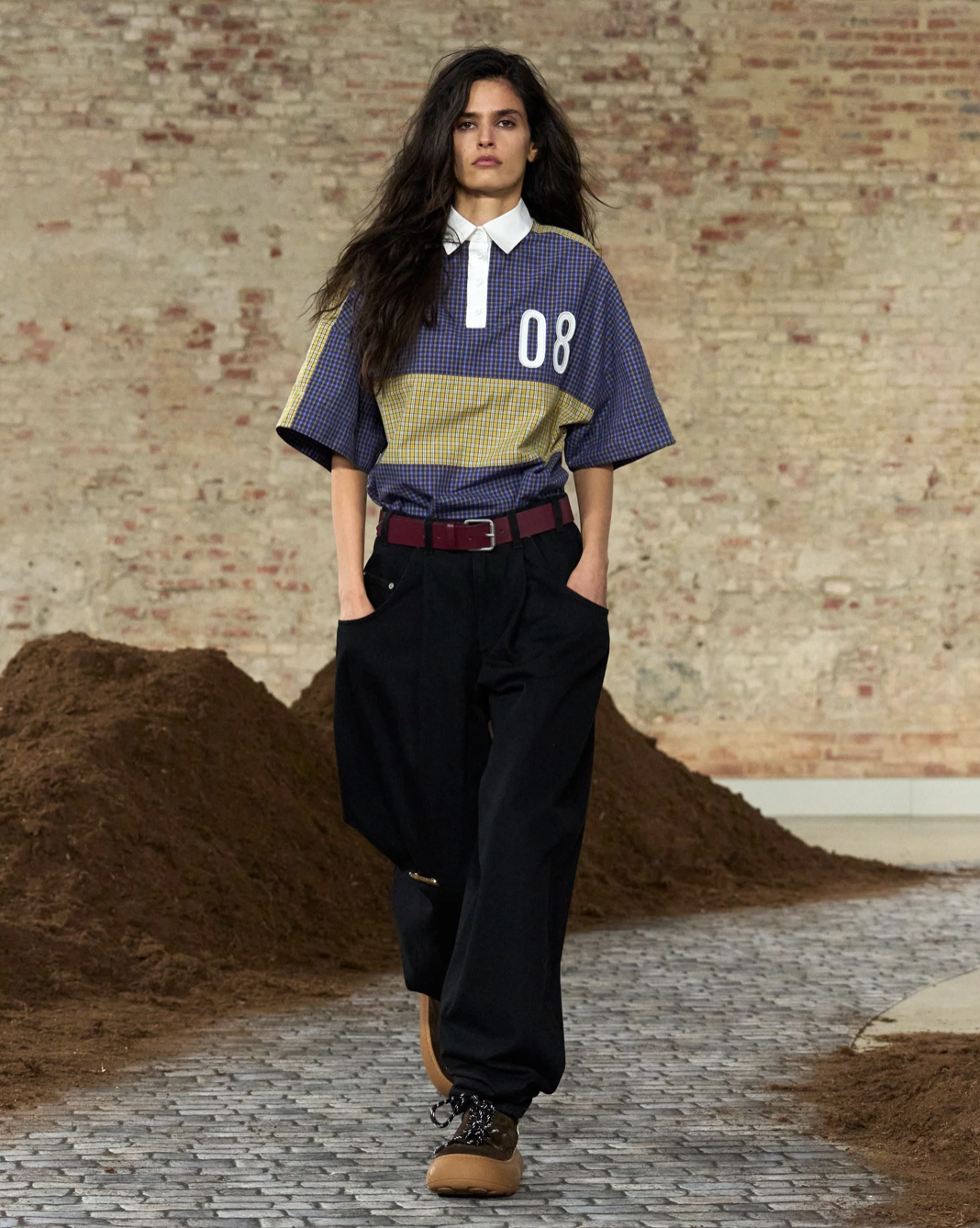
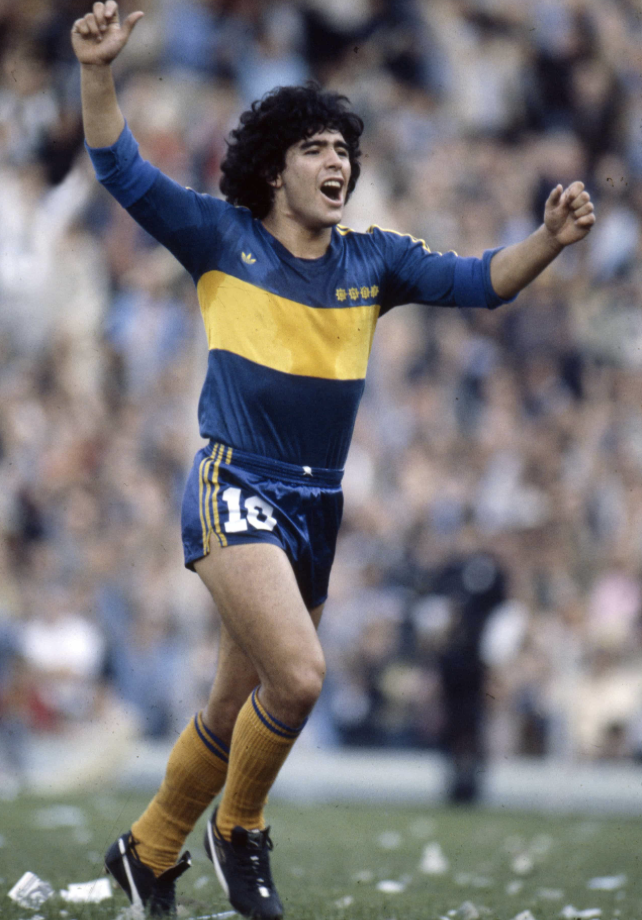
Football, of course, had to appear as well. Boca Juniors is one of Argentina’s most iconic clubs, recognized for its navy and yellow jersey and for its association with Diego Maradona during the 1980s and 1990s. Here, that jersey is translated into a structured high fashion polo in navy, yellow, and checks rather than reproduced literally. The design does more than borrow team colors. It reframes stadium culture and the near religious admiration surrounding Maradona as a polished fashion reference while quietly questioning why certain uniforms, prep, varsity, or European football kits, are considered stylish, while others remain boxed in as “only” fan merchandise..
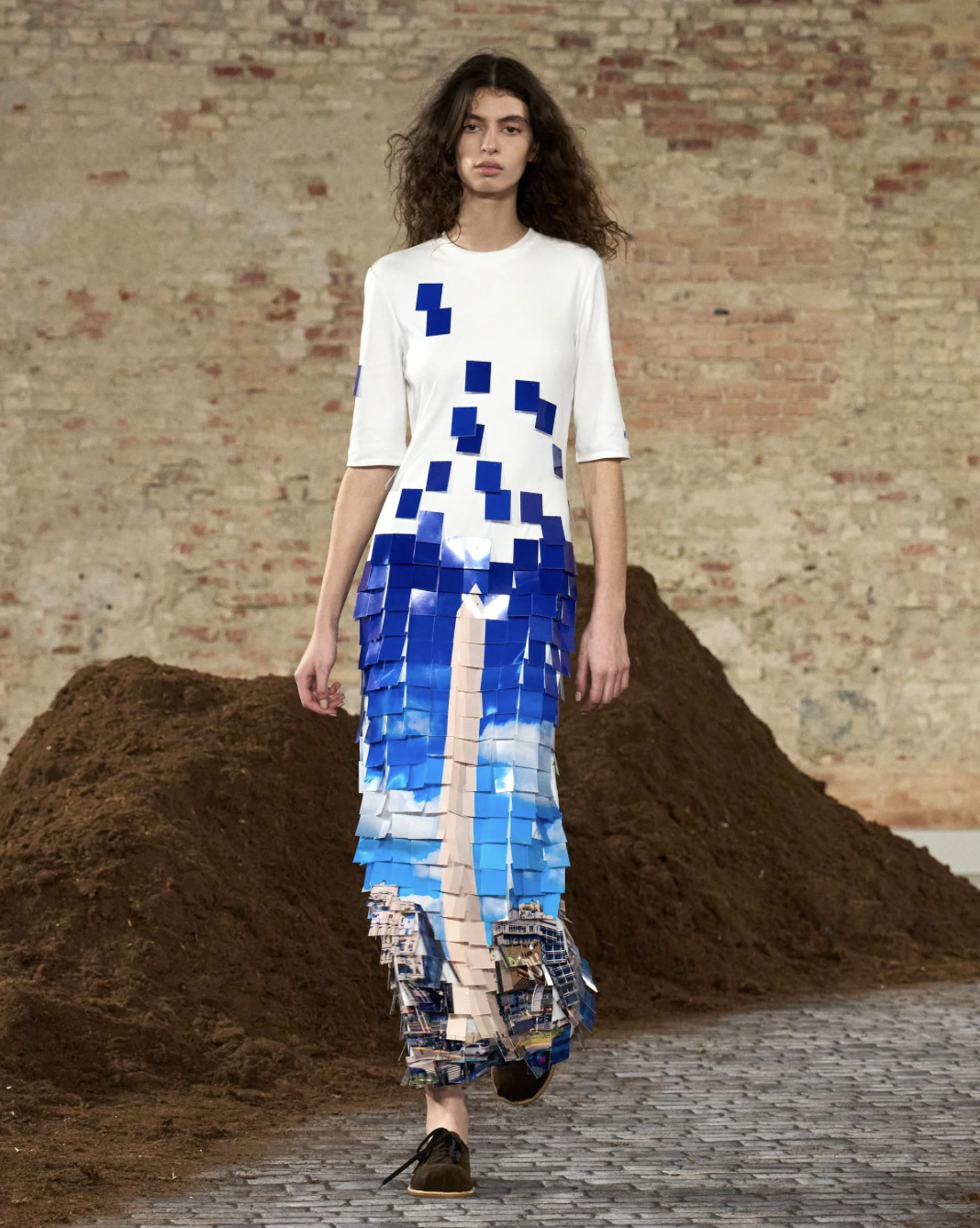
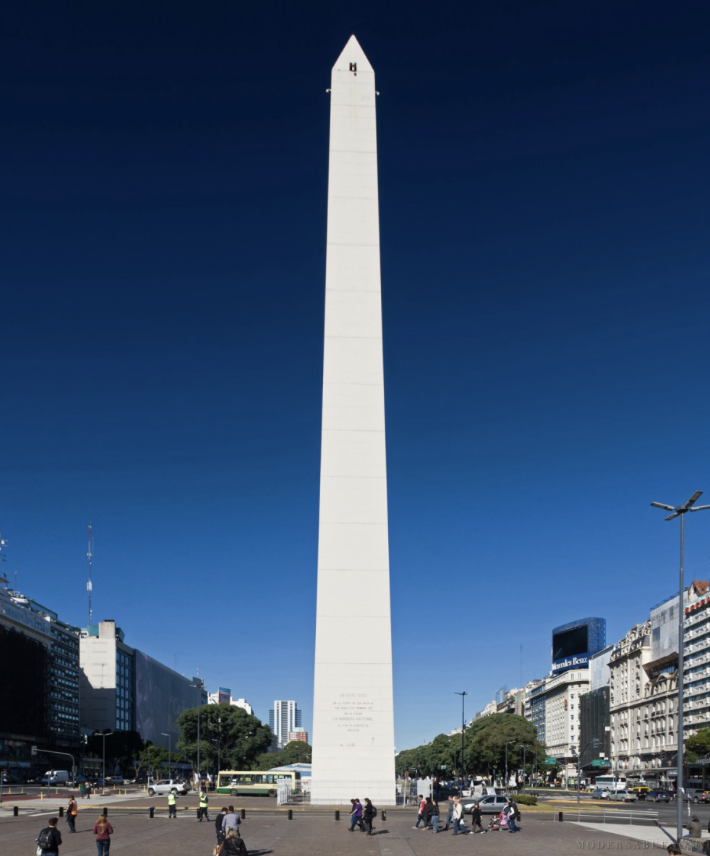
Finally, a dress covered in cascading blue and white squares references the Obelisco, the towering monument at the center of Buenos Aires, and Avenida 9 de Julio, the enormous avenue surrounding it. The shifting panels evoke several ideas at once: the colors of the Argentine flag, digital pixels, and the glow of city lights stretching across the avenue at night. The result transforms a fixed piece of architecture into something fluid and wearable, making each step down the runway feel like carrying a fragment of Buenos Aires through the room.
What This Collection Says About Fashion’s Memory
Seen as a whole, Moschino’s Fall/Winter 2026 collection is less about using Argentina as a mood board and more about who gets to tell Argentina’s stories. Appiolaza works with references deeply tied to ordinary life there: bus tickets from city colectivos, churro sellers walking beaches in summer, comic strip characters like Mafalda, and countless other details often excluded from luxury fashion. He treats them as worthy material without softening them or making them appear “less local” first.
The humor in the collection lands, but it is not directed at Argentina itself. Instead, it points toward rigid industry gatekeeping, the country’s economic instability, and a fashion system that still struggles to treat Latin American experiences as serious cultural material unless they can be packaged into simplified tropical fantasy.
For a platform like Smart Fashion, the collection opens another conversation entirely. If personal memory, work uniforms, local rituals, and cultural figures can all shape a luxury collection, then sustainability cannot only be about fabrics and supply chains. It must also include the protection of cultural memory: whose realities are represented on runways, whose uniforms become couture, and whose everyday lives are considered worthy of preservation. All of that matters when imagining a fairer fashion future.