
Vegea’s 10-Year Push to Make Biomaterials Industrially Relevant

GrapeSkin, Vegea’s wine-derived biomaterial, is designed to merge circular innovation with luxury-grade performance. Photo Credit: Courtesy of Vegea
There’s a particular kind of optimism that only exists inside material innovation. Not the glossy, marketing-heavy version that fashion has learned to package into mood boards and sustainability buzzwords, but the quieter kind, the kind built in laboratories, vineyards, industrial plants, and years of trial and error most consumers never see.
That’s the energy surrounding Vegea as the Italian biomaterials company marks its 10th anniversary.
In an industry where sustainability startups appear and disappear almost as quickly as trend cycles, surviving long enough to reach a decade is already significant. Expanding industrial production at the same time is something else entirely.
The company behind GrapeSkin, the wine-derived material made from grape marc — the skins, seeds, and stalks left over from winemaking — is using the milestone to scale its material systems for fashion, interiors, and automotive applications. And in a sector where “innovation” often stalls at the prototype phase, that detail matters. Because the real challenge has never been inventing sustainable alternatives, but making them usable, reliable, scalable, and available within real manufacturing systems.
Founded in Milan by Gianpiero Tessitore and Francesco Merlino, Vegea emerged from a deceptively simple question: what if the massive volume of agricultural waste generated by the wine industry could become a viable material system for fashion?

Francesco Merlino, founder and CEO of Vegea, inside the company’s material archive and development space in Italy. Photo Credit: Courtesy of Vegea
What eventually became GrapeSkin grew out of years of research into plant-based polymers, industrial coatings, and material engineering. But what makes Vegea particularly interesting right now isn't simply that the company developed another leather alternative. Fashion has seen no shortage of those over the past decade. What distinguishes Vegea is the company's increasing focus on industrialization itself.
Because beneath nearly every biomaterial success story lies the same difficult question: can the material actually scale?
Luxury brands may embrace sustainability language enthusiastically in campaigns and runway collections, but production teams operate very differently. They need consistency, predictability, and timelines. Can they source it again next season? Can production scale? Will the color match? Will lead times explode? Vegea seems acutely aware that sustainable materials only matter if brands can depend on them.
That awareness sits at the center of the company's newest expansion plans. According to Marco Valtolina, Vegea's Partner and Head of R&D, the company is introducing new industrial coating and production systems specifically designed to improve manufacturing scalability and material consistency across larger volumes.
"Reliable supply is a real concern, and it's something we addressed long before the material reached designers," Valtolina says.

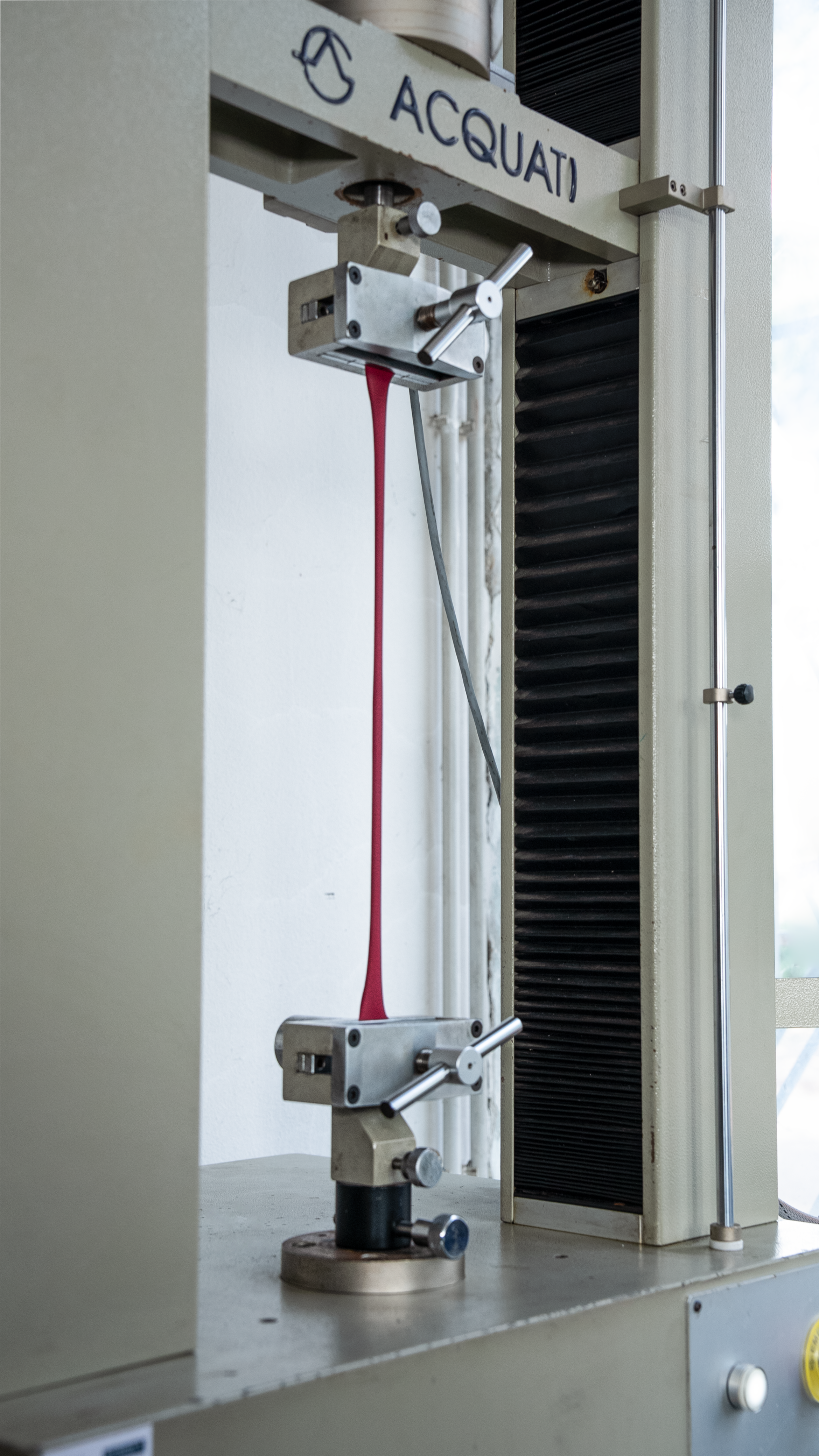

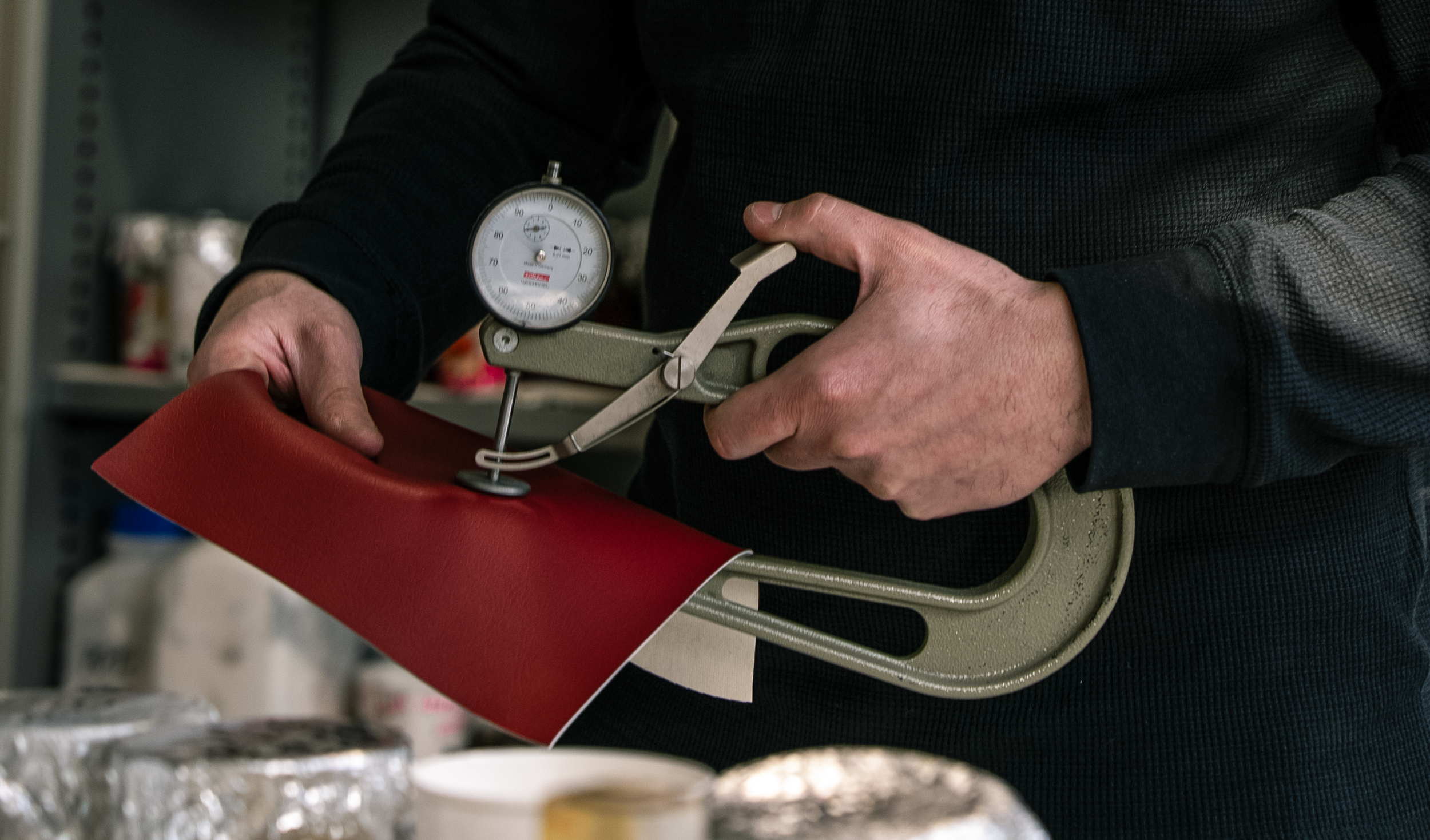
Vegea’s answer has been to engineer GrapeSkin less like an experimental novelty and more like infrastructure. Much of that infrastructure is managed internally, from laboratory analysis and pilot testing to industrial-scale coating and production.
Part of that strategy starts with abundance. Vegea currently uses less than 1% of the grape residues generated in Northern Italy, working through long-term partnerships with wineries and distilleries while maintaining stored reserves of processed biomass to avoid dependence on seasonal harvest cycles. In other words, the company is thinking like a manufacturer, not just a startup.
That industrial mindset is increasingly important as fashion confronts the material realities behind its climate commitments. According to organizations like the Ellen MacArthur Foundation and Global Fashion Agenda, material production remains one of the largest contributors to fashion’s environmental footprint, particularly through virgin fossil-based synthetics and resource-intensive leather supply chains. Vegea positions GrapeSkin as a vegan, bio-based alternative to both animal leather and fossil-fuel-derived synthetic materials.
The material is more than 92% bio-based, avoids toxic solvents and heavy metals in production, and uses wine-industry by-products without requiring additional agricultural land use, according to Vegea. Vegea also states that its materials are REACH compliant, cruelty free, and manufactured entirely in Italy. The company conducts Life Cycle Assessments and annual Global Recycled Standard audits to track environmental performance and supply-chain traceability over time.
From grape residue to finished material, Vegea’s production process turns wine-industry by-products into GrapeSkin. Photos Credit: Courtesy of Vegea
But what’s perhaps most interesting is that Vegea refuses to frame GrapeSkin as a compromise material. For years, sustainable fashion products were marketed through sacrifice: less luxurious, less durable, less desirable, but “better for the planet.” GrapeSkin instead enters the conversation through aesthetics, consistency, and performance.
“Where GrapeSkin performs best today is in visual quality, surface customization and process reliability,” says Valtolina. “Unlike animal leather, it offers uniform thickness, colour consistency and reproducibility across batches.”
Vegea offers GrapeSkin in a range of colors and finishes designed for fashion, interiors, and accessories applications. Photo Credit: Courtesy of Vegea
That consistency matters enormously in luxury and commercial production alike. Designers can experiment creatively without worrying that every roll of material will behave differently. And unlike many early biomaterials that struggled with durability concerns, Vegea says GrapeSkin already performs competitively in abrasion resistance, flex resistance, UV stability, and hydrolysis resistance. Vegea also argues that longevity itself is part of sustainability: products that last longer ultimately reduce replacement cycles, waste, and overall material consumption.
At the same time, the company is careful not to pretend the work is finished. Valtolina openly acknowledges that Vegea continues pushing boundaries around long-term durability optimization and cost efficiency, two challenges nearly every alternative material company is currently navigating. That transparency feels refreshing in a sector often oversaturated with vague “future of fashion” promises disconnected from manufacturing realities.
Maybe that’s also what the anniversary represents. Not simply longevity, but survival through an era where countless material startups struggled to move beyond concept-stage visibility into operational manufacturing systems.
Fashion is entering a period where sustainability can no longer survive on aesthetics alone. Brands increasingly need materials that function inside real supply chains, real margins, and real production calendars. The next decade of sustainable fashion likely won’t be defined by who creates the most experimental prototype, but by who successfully builds systems capable of replacing extractive materials at a meaningful scale. Vegea seems determined to become part of that infrastructure.

Vegea positions GrapeSkin across fashion, interiors, packaging, and automotive applications, with collaborations spanning luxury, performance, and independent brands. Photos Credit: Courtesy of Vegea
At the same time, the company insists innovation shouldn’t belong exclusively to luxury conglomerates or multinational manufacturers. Vegea says smaller labels can begin working with GrapeSkin through sampling programs, capsule collections, and limited production runs, allowing independent designers to test the material without immediately committing to industrial-scale orders.
That accessibility matters because some of fashion’s most important experimentation still happens at the independent level: inside small studios, emerging brands, and designers willing to challenge material norms before larger companies are ready to move.
“Innovation also comes from independent designers and emerging labels,” Valtolina says.
Ten years in, Vegea’s evolution says something larger about where fashion innovation is heading. The future probably won’t arrive through a single miracle material that suddenly fixes the industry overnight. It will come through quieter, more systemic shifts: agricultural waste becoming feedstock, laboratories becoming factories, and biomaterials becoming ordinary enough that designers stop treating them as alternatives at all.
And perhaps that’s what makes Vegea’s 10th anniversary feel meaningful beyond the company itself. In fashion, sustainability has often been treated like a perpetual future tense, something always promised, rarely operationalized. But after a decade of research, manufacturing development, and industrial expansion, Vegea is making a different argument: that biomaterials are no longer experimental ideas waiting for relevance. They are slowly becoming part of the infrastructure fashion may eventually depend on.
That may ultimately be the most important milestone of all.