
Not a Trend, But a Thread: Clothing, Care & Community on the Streets, Not in the Forests
Across cities and communities, a quiet clothing movement is unfolding, not led by designers or brands, but by neighbors, strangers, and citizens who believe in warmth without conditions.
Forget the romantic imagery of “clothing forests” draped over trees in wintry woods. That viral story? It doesn’t hold up under scrutiny. There is no verified evidence of widespread, organized “clothing forests” in Canada or France. Multiple identical social media posts cite fabricated sources or untraceable claims, with no coverage by major media outlets.
But what is real is perhaps even more meaningful: hyper-local mutual aid efforts that reflect the same values of compassion, dignity, and circular fashion—minus the mythmaking.
Canada: Real Projects Rooted in Care
In places like Saint Andrews, New Brunswick, the Clothesline Project has inspired locals to hang warm winter wear on fences or public hooks—often with tags that say “Take what you need.” From this, similar efforts like “warming trees”have appeared in other cities, such as Ottawa, though these are usually temporary, organized by schools, churches, or nonprofits.
These efforts aren’t random acts of coat-hanging in remote woods. They’re urban, accessible, and community-supported, responding to real, local needs.
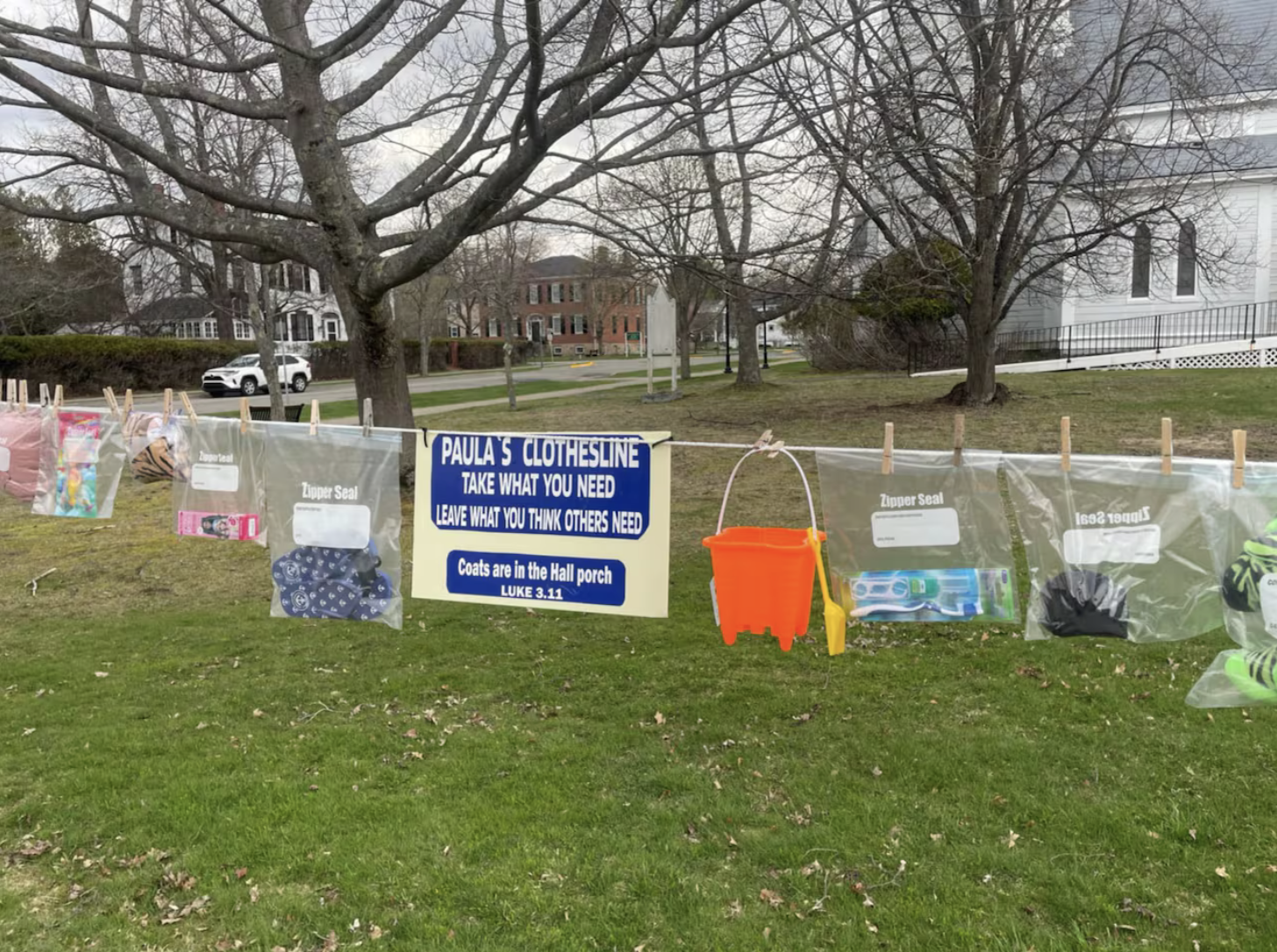
Image source: cbc.ca “You don’t need a building to build a community. Sometimes, a tree is enough.” — Local organizer, Saint Andrews
France: Fashion Culture Meets Mutual Aid
France, a nation famed for its fashion, also has a long tradition of solidarity initiatives that blend public space with mutual support. While the viral story of “forêts de vêtements” remains unverified, cities like Paris, Lyon, and Marseille do host clothing donation boxes, public coat drives, and solidarity clothing events, especially during winter months. These aren’t spontaneous forests of clothing, but rather structured efforts facilitated by local charities, housing organizations, or municipal partners. What’s powerful is not the fantasy, but the function.
What These Initiatives Really Do
They:
Extend the lifecycle of garments that would otherwise end up in landfills
Provide direct access to winter gear for people who are unhoused or underserved
Remove the barriers of bureaucracy (no forms, no gatekeeping)
Build trust in public space through reciprocal generosity
These projects echo the values of the circular economy, as championed by:
Ellen MacArthur Foundation – on designing out waste
Fashion for Good – on inclusive fashion innovation
Fashion Revolution – on transparency and ethics in clothing systems
But they go even further. These are not just sustainable, they are restorative. They don’t just keep people warm. They preserve dignity.
Fashion as Infrastructure of Kindness
In a world where fashion often signals status, these grassroots efforts redefine clothing as infrastructure of care, a way of saying: You are not invisible. You deserve to be warm. Whether a coat is left on a fence or handed out at a pop-up, the gesture is the same: Fashion not as product, but as presence.
Want to Start One?
You don’t need a forest. You need:
A clean coat, scarf, or pair of gloves
A safe, visible spot with foot traffic (bus stop, fence, park gate)
A waterproof note: “Take what you need. Leave what you can.”
Optional: coordinate with others (schools, cafés, mutual aid groups)
Be ready to monitor and restock. Use social media responsibly; focus on real, local visibility, not viral performance.